
Which Hydrocyclone Diameter Is Best for Gold Processing Plants?
Introduction
In the relentless pursuit of higher efficiency and recovery rates, the modern gold processing plant is a finely tuned symphony of mechanical and metallurgical processes. Central to this operation is the grinding circuit, where valuable ore is reduced to a size suitable for liberation. However, without effective classification, this grinding effort is wasted. The Hydrocyclone is the key instrument in this classification stage, tasked with separating particles based on size and density.
One of the most common and critical questions facing plant operators and process engineers is: which hydrocyclone diameter is best for a gold processing plant? The answer is not a simple number. It's a strategic decision that directly impacts the efficiency of every downstream process, from flotation to leaching.
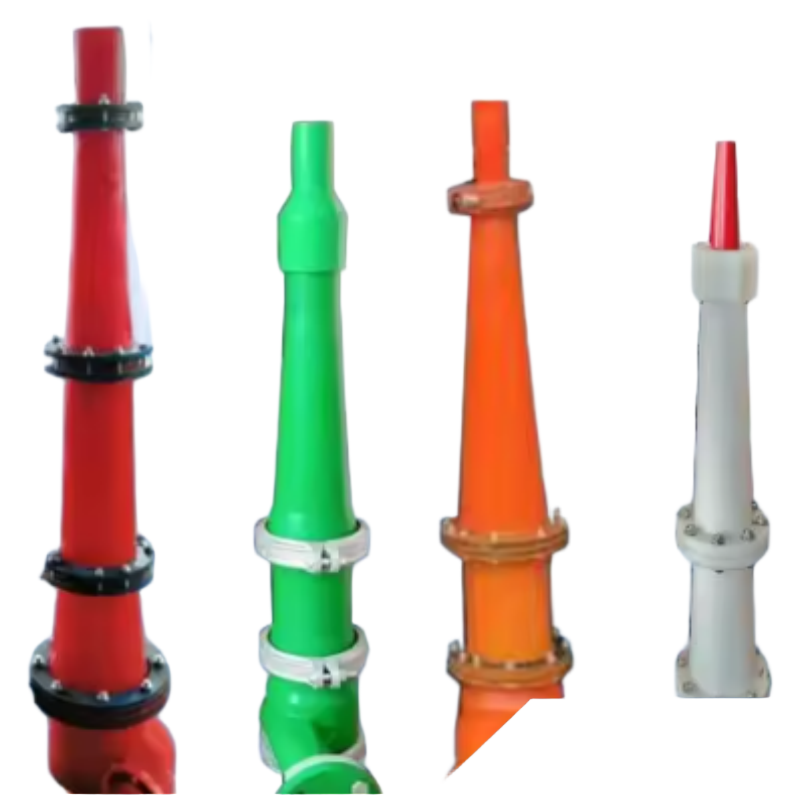
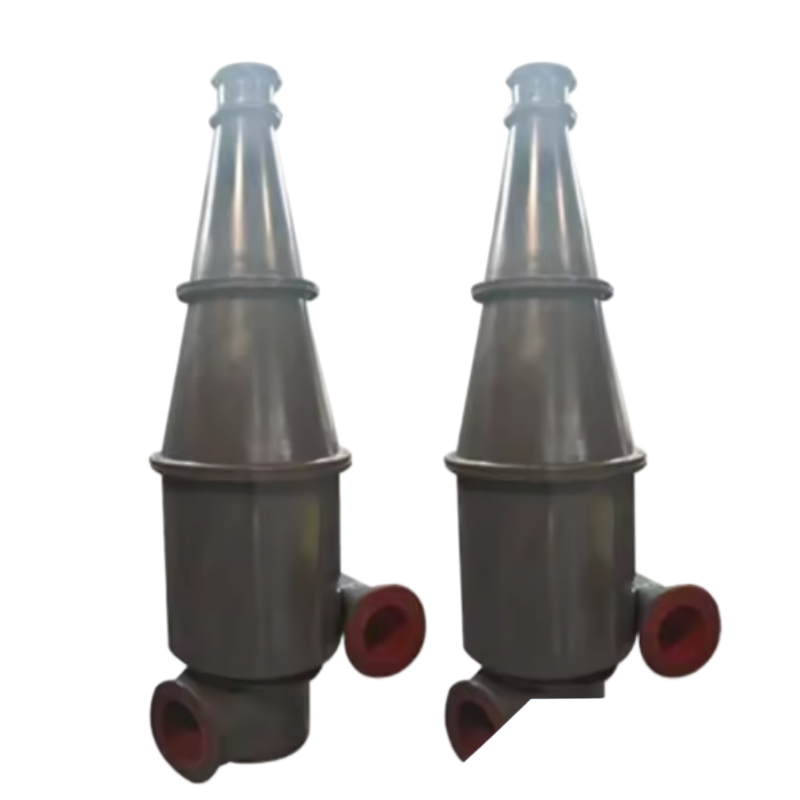
The hydrocyclone diameter is the primary design parameter influencing its cut size (d50)—the particle size at which a particle has a 50% chance of reporting to the overflow or underflow. The fundamental relationship is that smaller hydrocyclone diameters generate stronger centrifugal forces, allowing for the separation of much finer particles.
Understanding this relationship is the first step in selecting the right equipment. Here’s a general guide to how diameter relates to cut size:
| Hydrocyclone Diameter | Typical Cut Size Range | Application Focus |
|---|---|---|
| 100–250 mm | 10–75 μm | Fine & ultra-fine classification; maximizing liberation |
| 250–500 mm | 30–150 μm | Standard flotation feed; common in many gold plants |
| 500–750 mm | 75–250 μm | Coarser classification; primary duties in high-tonnage circuits |
| 750 mm+ | 150–500 μm | Pre-classification; limited use in fine grinding circuits |
For most gold processing plants targeting flotation feed, a hydrocyclone in the 250–500 mm range offers a practical balance between classification efficiency and capacity. However, the final cut size is also a function of feed pressure, slurry density, apex size, vortex finder design, and the condition of your Cyclone Liners and other internal wear parts.
Gold recovery is intrinsically linked to particle liberation. If valuable gold particles are not liberated from their host rock, they cannot be captured by flotation or leaching processes. The hydrocyclone directly influences this liberation.
A larger diameter hydrocyclone produces a coarser cut. This means larger, potentially unliberated particles are sent to the downstream process, while a smaller diameter cyclone produces a finer, more consistently sized feed, ensuring a higher proportion of particles are liberated, which is essential for effective Flotation.
In many modern gold concentrators, operators are shifting towards clusters of smaller units. This approach allows them to combine the high capacity of a large system with the fine, precise classification of smaller cyclones.
The trend toward smaller hydrocyclones in gold processing is driven by several significant operational advantages:
Improved Cut Size Control: Smaller cyclones produce a sharper particle separation, resulting in a more consistent overflow particle size distribution. This is a boon for downstream processes.
Better Flotation Performance: A consistent particle size distribution helps flotation circuits operate more efficiently, leading to higher recovery rates.
Higher Recovery Potential: The more precise classification ensures that valuable gold particles are liberated and recovered effectively.
Flexible Operation: Multiple smaller hydrocyclones can be operated in parallel, making it easier to adjust capacity according to ore conditions.
Reduced Classification Variability: A well-designed cyclone cluster often provides more stable performance than a single large hydrocyclone.
Selecting the ideal hydrocyclone diameter is a process that requires a comprehensive evaluation of both your plant's needs and the ore's characteristics. It is a critical step in designing an efficient Grinding Circuit.
Consider Plant Throughput: A small gold plant processing 100 TPH will have different requirements than a large operation processing 1,000 TPH.
Evaluate Ore Hardness: Harder ores often require finer grinding and tighter classification control. In these cases, smaller hydrocyclones are often preferred.
Analyze Gold Liberation Characteristics: The degree of gold liberation in the ore determines the target particle size needed before flotation or leaching.
Monitor Feed Conditions: Stable feed pressure and slurry density are critical; even the best hydrocyclone diameter cannot compensate for poor operating conditions.
Conduct Pilot Testing: Whenever possible, the most successful projects rely on pilot-scale testing or historical operating data to validate design decisions.
Based on extensive practical field experience, hydrocyclone selection involves considerations beyond theoretical calculations. Many operators focus solely on throughput and choose large-diameter hydrocyclones. However, when fine gold recovery is the priority, smaller hydrocyclones frequently provide more stable overflow particle size distributions.
Another common mistake is overlooking the relationship between hydrocyclone capacity and ball mill performance. An improperly matched cyclone can increase circulating load and reduce grinding efficiency. In large gold concentrators exceeding 500 TPH, hydrocyclone clusters generally offer greater flexibility than single large cyclones.
Hydrocyclones operate under highly abrasive conditions. Key wear components include the Vortex Finders, Apex Cones, and Feed Chambers. As these components wear, classification accuracy declines and operating costs increase.
Modern mining operations are increasingly adopting high-quality polyurethane and ceramic liners. Polyurethane liners offer excellent abrasion resistance, lightweight construction, and ease of maintenance, while ceramic liners provide exceptional wear resistance for the most abrasive ores. Choosing the right wear material helps maintain consistent classification performance and reduce downtime.
1. What is the best hydrocyclone diameter for gold flotation feed?
For standard gold flotation feed targeting a grind size of 75 μm or finer, hydrocyclones in the 250–500 mm range are commonly used. However, for ultra-fine applications, multiple smaller 100-250 mm cyclones in a cluster are often preferred for their superior classification precision.
2. Can I use a large hydrocyclone for fine gold recovery?
While possible, it is not ideal. Large hydrocyclones produce a coarser cut, which can lead to unliberated gold particles reporting to the tailings. For optimizing fine gold recovery, a cluster of smaller hydrocyclones is generally a more effective solution.
3. How does feed pressure affect hydrocyclone performance?
Feed pressure directly influences the centrifugal force inside the cyclone. Higher pressures result in a finer cut size and increase capacity but also accelerate wear on internal components like the Vortex Finder and Apex.
4. Why do hydrocyclones wear out so quickly?
The high-velocity, abrasive slurry passing through a hydrocyclone creates a highly erosive environment. Key wear components, such as the Cyclone Liners, are designed to be sacrificial and require regular inspection and replacement to maintain classification performance.
5. How much does a hydrocyclone cost?
The cost varies significantly based on size, material, and configuration. A standard 250mm polyurethane-lined cyclone may cost a few thousand dollars, while a complete 500mm+ cluster of cyclones and pumps can cost significantly more. For accurate pricing, Contact Us for a quote.
6. What is a hydrocyclone cluster?
A hydrocyclone cluster consists of multiple smaller hydrocyclones (often 100–250 mm) arranged in parallel. This configuration provides the high capacity of a large single unit while offering the superior classification efficiency and operational flexibility of smaller cyclones.
7. How do I know when to replace my cyclone liners?
Regular inspections are essential. Look for visible thinning of the liner, changes in the cyclone's underflow pattern, or a significant shift in the overflow particle size distribution. A sudden drop in classification efficiency is a strong indicator of excessive wear.
8. What is the difference between a hydrocyclone and a spiral classifier?
Both are used for classification. A Spiral Classifier uses a mechanical rake to separate particles based on settling speed, while a hydrocyclone uses centrifugal force. Hydrocyclones are generally more efficient for fine particle separation and have a smaller footprint.
9. Can I get a hydrocyclone that is compatible with Weir or other OEM parts?
Yes. Many suppliers, including HUATAO, produce OEM-Compatible Parts. It is crucial to provide the correct OEM part number and drawings to ensure a proper fit and performance.
There is no single hydrocyclone diameter that is ideal for every gold processing plant. While 250–500 mm cyclones are common, the optimal diameter depends on a range of factors including target grind size, gold liberation characteristics, plant throughput, and wear conditions. For many fine gold applications, multiple smaller hydrocyclones operating in clusters provide the best combination of classification efficiency, operational flexibility, and recovery performance. Working with an experienced supplier and ensuring the use of high-quality Wear Parts is the most reliable way to secure your plant's success.
Related Articles
Related Products
Related Technical Guides
How Do I Calculate Hydrocyclone Capacity For Mineral Processing
Hydrocyclone Selection For Mineral Processing Full Engineering Guide
10 Reasons Hydrocyclones Outperform Traditional Separation Equipment
Related Buyer Guides
Where Can I Find Reliable Hydrocyclone Suppliers In China For Mining And Mineral Processing
Best Flotation Equipment Spare Parts Suppliers How To Choose For Longer Wear Life Higher Recovery
Related Comparison Articles
Hydrocyclone Vs Vibrating Screen Which Classification Solution Is Better For Mineral Processing
A Complete Comparison Of Spiral Classifier Types In Mineral Processing
Contact:
Annie Lu
Email: annie.lu@huataogroup.com
Mobile / WhatsApp: +86 180 3242 2676
Hydrocyclone, Gold Processing, Classification, Mining, Engineering, Grinding, Recovery, Equipment Selection
can not be empty
can not be empty

HUATAO GROUP - SCREENS
ADD : No.298 Zhonghua North Street, Shijiazhuang 050000 China.
TEL : +86 0311 80690567
EMAIL :market@huataogroup.com
Web: www.tufflexscreen.com
 WhatsApp & WeChat : +86 18033763037