
A jaw plate is the primary working component of a jaw crusher, consisting of a fixed jaw plate mounted on the crusher frame and a moving jaw plate attached to the swing jaw. These plates directly contact the feed material, using immense compressive force to break large rocks into smaller, more manageable sizes.
Because jaw plates operate in one of the harshest environments in mineral processing, they are classified as consumable wear parts that require regular replacement. The choice of jaw plate directly influences:
Crushing efficiency
Product size consistency
Maintenance frequency and cost
Overall equipment uptime
Total cost per ton processed
Selecting a long-lasting, high-quality jaw plate is therefore critical for maintaining a profitable and reliable crushing operation.
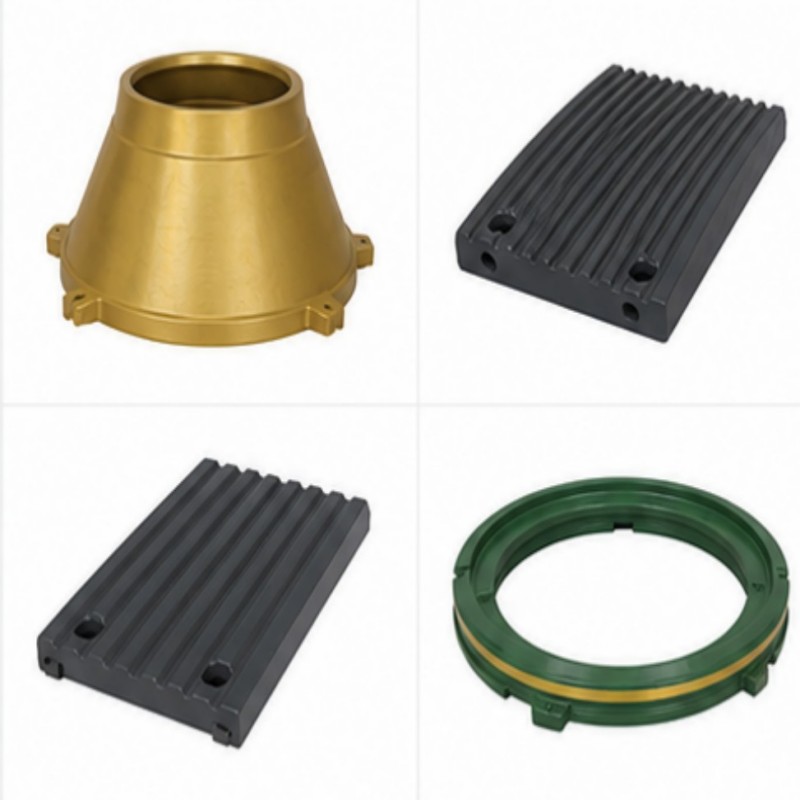
A jaw crusher operates on the principle of a compression-style crushing action, mimicking the movement of a human jaw.
Fixed Jaw: The stationary jaw plate is mounted on the crusher frame.
Moving Jaw: The moving jaw plate is attached to the swing jaw, which is driven by an eccentric shaft and a toggle plate mechanism.
Crushing Action: As the moving jaw approaches the fixed jaw, the material trapped between them is subjected to high compressive and shear forces, fracturing the rock.
Discharge: When the moving jaw retreats, the crushed material falls by gravity through the discharge opening (closed side setting or CSS) at the bottom.
The design of the jaw plate—including tooth profile, tooth pitch, and corrugation pattern—directly affects the nip angle and the efficiency of force transfer to the rock. A well-designed jaw plate ensures uniform wear, optimal throughput, and consistent product sizing.
Investing in high-quality, long-lasting jaw plates delivers substantial operational and financial benefits:
Reduced Maintenance Costs: Fewer replacements mean lower costs for parts, labor, and logistics.
Increased Equipment Uptime: Less frequent change-outs translate to more production hours and higher overall plant availability.
Consistent Product Quality: Uniform wear maintains a stable crushing chamber profile, ensuring consistent product gradation.
Lower Cost Per Ton: The cost of jaw plate consumption per ton of material processed (cost/ton) is the ultimate measure of value.
Improved Safety: Fewer maintenance interventions mean reduced exposure of workers to high-risk areas around the crusher.
Jaw plates are essential across a wide range of primary crushing applications:
| Application Area | Specific Examples |
|---|---|
| Metal Mines | Iron ore, copper ore, gold ore, nickel ore, lead-zinc ore |
| Non-Metallic Mines | Phosphate rock, barite, limestone, gypsum |
| Aggregate Industry | Granite, basalt, quartzite, gravel for concrete and asphalt |
| Construction & Demolition | Concrete, bricks, asphalt recycling |
| Coal Industry | Primary reduction of run-of-mine coal |
| Material | Advantages | Disadvantages | Best Application |
|---|---|---|---|
| Mn13 Steel | Excellent toughness, good work-hardening, cost-effective, industry standard | Limited wear resistance in low-impact applications | General crushing, medium-hardness ores, less abrasive materials |
| Mn18 Steel | Superior wear resistance vs. Mn13, better work-hardening rate, longer service life | Higher cost, slightly lower impact toughness than Mn13 | Highly abrasive ores, heavy-duty primary crushers, copper/gold ores |
| Mn22 Steel | Exceptional wear resistance for the most severe conditions, maximum work-hardening | Highest cost, reduced impact toughness compared to lower Mn grades | Extreme abrasion, large feed size, high tonnage operations |
| Alloy Steel | Higher strength and hardness, good fatigue resistance, cost-effective for specific applications | Lower impact toughness than manganese steels | Medium-hard materials, applications requiring high strength and moderate wear resistance |
| High-Chromium Composite | Maximum hardness and abrasion resistance, extended wear life | Very brittle, high risk of cracking under impact | High abrasion, low-impact applications (often used as inserts in composite designs) |
HUATAO Recommendation: There is no universal "best" material. The optimal material is one that is custom-tailored to your specific ore, feed size, and crusher model. HUATAO engineers analyze your operating conditions to precisely adjust alloy composition and heat treatment, achieving the perfect balance between wear resistance and impact toughness for your unique application.
| Operating Condition | Recommended Jaw Plate Characteristic | Reasoning |
|---|---|---|
| High-Abrasion Ore (e.g., siliceous gold, quartzite, iron ore) | High hardness, wear-resistant alloy steel or composite plates with high-chromium inserts | Abrasion is the primary failure mode, requiring maximum hardness and wear resistance |
| Large, High-Impact Ore (e.g., large lump iron ore, hard granite) | High manganese steel (Mn18, Mn22), prioritizing toughness and work-hardening | Impact forces are severe, requiring excellent toughness and work-hardening to prevent fracture |
| Medium-Hard, Moderate Abrasion (e.g., limestone, coal) | Standard Mn13 or cost-effective alloy steel | Moderate conditions allow standard materials to meet life and cost requirements |
| Wet / Sticky Material | Special tooth designs and anti-clogging profiles | Material tends to pack in the crushing chamber, causing uneven wear and reduced efficiency |
| Industry | Ore Type | Typical Hardness | Recommended Jaw Plate Material | Key Consideration |
|---|---|---|---|---|
| Iron Ore Mining | Magnetite / Hematite | Hard / Very Hard | Mn18, Mn22, Custom Alloy Steel | Impact resistance + abrasion resistance |
| Copper Mining | Porphyry Copper | Medium-Hard / Hard | Mn18, High-Chromium Composite | Abrasion resistance + cost-effectiveness |
| Gold Mining | Quartz Vein Gold | Medium-Hard / Hard | Mn13, Mn18 | Toughness + overall cost per ton |
| Aggregate Production | Granite / Basalt | Hard / Very Hard | Mn18, Alloy Steel | Abrasion resistance + product uniformity |
| Coal Mining | Run-of-Mine Coal | Soft / Medium | Mn13 | Impact resistance + fatigue resistance |
Follow these steps to select the optimal jaw plate for your operation:
Step 1: Define Your Operating Conditions
Determine the Abrasion Index (Ai) and Unconfined Compressive Strength (UCS) of your feed material.
Measure your maximum feed size and material moisture content.
Step 2: Identify Your Priority
What is your primary goal? Maximum service life, lowest cost per ton, or specific performance under challenging conditions?
Step 3: Select Material and Tooth Profile
Based on your ore characteristics, work with your supplier's engineering team to select the best material grade and tooth profile (e.g., corrugated, smooth, sharp-toothed).
Step 4: Evaluate Supplier Capabilities
Look beyond price. Assess the supplier's R&D, foundry, heat treatment, and machining capabilities.
Step 5: Request a Trial
Ask the supplier for a sample batch and establish a wear-tracking protocol to measure actual performance against benchmarks.
A structured procurement approach minimizes risk and ensures you get the right product.
Information Required for a Quote:
Crusher Make and Model: e.g., Metso C106, Sandvik CJ411.
OEM Part Number: The original equipment manufacturer's reference number.
Technical Drawing: Provide a 2D or 3D drawing to ensure accurate dimensions and mounting hole alignment.
Specified Material Grade: e.g., Mn18 with hardness range 200-230 HB.
Target Performance: Expected service life in hours or tons processed.
Key Questions to Ask Potential Suppliers:
Can the supplier manufacture according to drawings? (Ensures perfect fitment.)
Can the supplier provide material reports and mechanical property certificates? (Ensures quality and traceability.)
Can the supplier support OEM replacement with proven experience? (Demonstrates expertise.)
Does the supplier have export experience? (Indicates reliable logistics and documentation.)
Can the supplier provide wear-life recommendations based on my specific ore? (Shows engineering capability.)
Supplier Evaluation Checklist:
| Criteria | Weight | Why It Matters |
|---|---|---|
| Price Competitiveness | 15% | Direct impact on operating cost, but not the only factor |
| Material Capability | 25% | Ability to offer multiple grades and custom alloys |
| Manufacturing & QC | 25% | In-house foundry, heat treatment, and continuous quality testing |
| Engineering Support | 15% | Can they provide application-specific recommendations? |
| Lead Time & Logistics | 10% | Delivery reliability and export experience |
| Case Studies & References | 10% | Proven performance in similar applications |
| Failure Mode | Possible Cause | Recommended Solution |
|---|---|---|
| Premature / Excessive Wear | 1. Tramp metal or hard inclusions in feed. 2. Feed size exceeds crusher capacity. 3. Closed Side Setting (CSS) too small. 4. Material too abrasive for selected grade. |
1. Improve feeding system with metal detectors/magnets. 2. Control feed size through pre-screening. 3. Adjust CSS according to manufacturer specs. 4. Upgrade to more wear-resistant material. |
| Cracking / Breakage | 1. Insufficient material toughness. 2. Crusher overloaded or oversized feed. 3. Improper installation (uneven bolt tension). 4. Material too brittle for impact conditions. |
1. Upgrade to higher-toughness material (e.g., Mn18 instead of Mn13). 2. Strictly control feed and avoid overloading. 3. Follow torque specifications during installation. 4. Select more impact-resistant alloy. |
| Rapid Tooth Wear / Flattening | Material is too abrasive for the selected jaw plate hardness. | Upgrade to a harder material, such as high-chromium composite or custom alloy steel. |
| Uneven Wear | 1. Uneven feeding (material concentrated on one side). 2. Incorrect CSS setting. 3. Improper installation. 4. Worn toggle plate causing misalignment. |
1. Improve feed distribution (use a proper feeder/chute). 2. Regularly check and adjust CSS. 3. Check installation accuracy. 4. Inspect and replace toggle plate if worn. |
| Spalling / Scaling | Extreme impact loads causing the work-hardened surface layer to become brittle and delaminate. | Optimize material chemistry, adjust crusher parameters to reduce peak impact forces, or consider a more ductile alloy. |
Daily Inspection:
Check all jaw plate bolts for tightness. Re-torque if necessary.
Listen for unusual knocking or rattling sounds (loose plate or tramp metal).
Visually inspect product size for any sudden changes (indicates wear).
Weekly / Monthly Inspection:
When the crusher is shut down, measure wear thickness at the top, middle, and bottom of both plates. Document findings to track wear patterns.
Inspect for any signs of cracks, spalling, or deformation.
Check the toggle plate and toggle seat for wear.
When to Replace:
Replace when the jaw plate thickness has worn down to 60-70% of its original thickness.
Replace when the tooth height is worn down by more than 50%.
Replace immediately if cracks or significant spalling are observed.
Critical Replacement Rule:
Always replace both the fixed and moving jaw plates together to ensure optimal crushing chamber geometry and performance. Replacing only one can lead to premature failure of the new plate.
Spare Parts Inventory Strategy:
Maintain a safety stock of at least 1-2 sets of jaw plates.
Establish a reliable relationship with a supplier who can deliver within your required lead time.
Consider the supplier's ability to provide emergency replacement if needed.
Case Study: Peruvian Copper Mine Achieves 60% Longer Jaw Plate Life with HUATAO Custom Solution
Customer Type: Medium-scale underground copper mine in Peru.
Ore Type: High-silica copper ore (highly abrasive, Ai > 0.8).
Operating Conditions: Primary jaw crusher (Metso C100) processing 2,000 tons per day. Previous standard Mn18 jaw plates had a service life of only 45 days, causing frequent production interruptions.
Problem: The high wear rate and frequent unplanned shutdowns were severely impacting production targets and escalating maintenance costs. The mine needed a solution that could extend service life and reduce downtime.
Solution: HUATAO GROUP conducted a comprehensive analysis of the ore and operating conditions. We recommended a custom high-chromium alloy steel jaw plate with an optimized tooth profile specifically designed to handle the high-abrasion ore. The custom alloy was engineered to provide superior wear resistance while maintaining sufficient toughness for the impact conditions.
Result: The customized HUATAO jaw plates achieved an impressive 72-day service life—a 60% improvement over the previous plates. This resulted in:
33% reduction in annual jaw plate replacement costs1. How long should a jaw plate last?
Answer: It depends entirely on your operating conditions. For soft limestone, jaw plates may last over 6 months. For highly abrasive ores like iron or gold, life may be as short as 1-2 months. Conduct a site-specific material analysis for an accurate estimate. Contact HUATAO for a professional assessment.
2. How do I know when to replace a jaw plate?
Answer: Replace when tooth height is worn by more than 50%, or when plate thickness is reduced by more than 40% of its original. Another key indicator is a significant increase in product top size. Regular wear tracking is essential for predicting replacement timing.
3. What's the difference between Mn13, Mn18, and Mn22?
Answer: The number indicates manganese content. Higher manganese means better work-hardening and wear resistance under impact, but at a higher cost. Choose based on your impact and abrasion severity—Mn18/Mn22 for severe conditions, Mn13 for standard applications. HUATAO can help you select the optimal grade.
4. Are aftermarket (non-OEM) jaw plates as good as OEM?
Answer: Yes, many leading aftermarket suppliers like HUATAO produce jaw plates that match or exceed OEM performance at a significantly lower cost (typically 20-40% savings). Evaluate the supplier's technical capabilities and quality control, not just the brand name.
5. Can HUATAO manufacture custom jaw plates?
Answer: Yes. HUATAO specializes in custom jaw plates. We can manufacture based on your drawings, OEM part numbers, or even analyze your ore samples to create a tailored solution for your specific application. Contact us to discuss your requirements.
6. What causes jaw plate cracking?
Answer: The most common causes are crusher overloading, tramp metal entering the chamber, improper installation (uneven torque), or material too brittle for the application. Choosing a high-toughness material like Mn18/Mn22 and following proper torque procedures can prevent this.
7. How much does a jaw plate cost?
Answer: Prices vary significantly based on material grade, weight, and quantity. We recommend focusing on the cost-per-ton metric rather than the upfront price, as this reflects true value. A higher-quality plate may cost more upfront but deliver lower cost per ton over its life.
8. Why should I replace both jaw plates at the same time?
Answer: Replacing both plates together ensures optimal crushing chamber geometry, balanced wear, and consistent product quality. Replacing only one can lead to premature failure of the new plate and reduced performance. This is a critical best practice.
9. How does HUATAO ensure product quality?
Answer: HUATAO conducts continuous metallurgical testing throughout the manufacturing process. We provide material certificates, mechanical property reports, and dimensional inspection reports with every shipment. Our quality control system ensures consistent performance.
10. What information do I need to provide for a quote?
Answer: To provide an accurate quote, we need your crusher make and model, OEM part number if available, technical drawings, and your target material grade. We also appreciate information about your ore type and operating conditions to recommend the optimal solution.
There is no single jaw plate manufacturer that universally offers the longest service life in every application. Published case studies indicate that some manufacturers have achieved remarkable wear-life improvements under certain conditions, and brands such as Metso are widely recognized for their durability.
However, the real key to maximizing jaw plate lifespan lies in selecting the appropriate material, ensuring high manufacturing quality, and using customized designs that match your specific crushing conditions.
As a professional supplier of mining equipment and wear parts, HUATAO GROUP provides customized jaw plates and other crusher wear components designed to deliver superior performance and extended service life across a wide range of mining applications.
Our engineering team combines precision casting, strict metallurgical testing, and customized alloy formulations to manufacture durable crusher wear parts for various mining applications. We also provide OEM-compatible jaw plates for numerous crusher brands and operating environments.
Related Products:
Related Technical Guides:
Why Premium Jaw Plates Can Save Thousands In Crusher Maintenance Costs
How Smart Troubleshooting Can Extend Jaw Crusher Service Life
Why Your Cone Crusher Keeps Failing The Real Impact Of Mantle And Concave Quality
OEM Compatible Crusher Wear Parts Technical Selection Failure Prevention And Sourcing Strategy
Related Buyer Guides:
Where To Buy High Quality Jaw Crusher Wear Parts Complete Engineering Procurement Guide
Best Crusher Wear Parts Suppliers For Mining Companies Engineering Guide Procurement Checklist
Who Are The Leading Crusher Wear Parts Manufacturers In China
Related Comparison Articles:
Best Alternative To Metso Crusher Wear Parts Complete Engineering And Procurement Guide
Which Crusher Wear Parts Supplier Exports To Australia And Canada Complete Buyers Guide
Best Flotation Equipment Spare Parts Suppliers How To Choose For Longer Wear Life Higher Recovery
Contact Us
HUATAO GROUP – Mining Equipment & Wear Parts Solutions
Contact: Annie Lu
Email: annie.lu@huataogroup.com
Phone / WhatsApp: +86 180 3242 2676
Website: http://www.tufflexscreen.com
Core Keywords: jaw plate, jaw plate service life, jaw plate manufacturer, crusher wear parts, high manganese steel, Mn13, Mn18, Mn22, custom jaw plate, OEM jaw plate, mining wear parts, HUATAO GROUP
Tags: jaw plate, crusher wear parts, jaw crusher, mining wear parts, high manganese steel, Mn13, Mn18, Mn22, wear parts supplier, mineral processing, aggregate crushing, iron ore, copper ore, gold mining, OEM replacement, custom casting, heat treatment, wear resistance, impact toughness, HUATAO GROUP
can not be empty
can not be empty

HUATAO GROUP - SCREENS
ADD : No.298 Zhonghua North Street, Shijiazhuang 050000 China.
TEL : +86 0311 80690567
EMAIL :market@huataogroup.com
Web: www.tufflexscreen.com
 WhatsApp & WeChat : +86 18033763037